podcasting

What is podcasting?
Podcasting is the preparation and distribution of audio files using RSS feeds to the computers of subscribed users. These files may then be uploaded to streaming services, which users can listen to on their smartphones or digital music and multimedia players, like an iPod. A podcast can easily be created from a digital audio file.
In addition to RSS, podcasts may be hosted on or embedded in websites that enable the podcast to be streamed or downloaded.
Podcasts are typically available as a series of prerecorded talk-radio shows that users can download to their computers or mobile devices. Podcasters often publish episodes on a regular schedule.
There is no prescribed format, length or style for a podcast. They may cover a range of subject areas, but an episode often focuses on one topic or story. Some podcasters read from a script, while others improvise.
The cultural milieu supporting podcasting is sometimes referred to as the podosphere, in the same way the cultural environment of blogging is called the blogosphere.
Who uses the podcasting format?
Content producers have increasingly turned to podcasts as an inexpensive and user-friendly distribution channel to reach a large audience.
Musicians and bloggers were early adopters of podcasts. Mainstream media organizations, such as The New York Times, National Public Radio (NPR) and The Washington Post, have since adopted the format.
Apple iPhones come with a pre-installed podcast directory. Many podcasts are free to download and listen to through Apple Podcasts. Some podcasts are associated with websites to provide additional resources and community forums for fans.
Podcasts are sometimes referred to as a digitally disruptive format because they changed how consumers accessed content.
They also changed how advertisers monetized it. Podcasts can be monetized through subscriptions, purchased ad time or crowdsourcing platforms, like Patreon.
How does podcasting work?
Podcasts are digital audio content distributed over the internet using a podcast hosting service. These services store all podcast episodes in one location and automate the generation of RSS feeds.
These feeds list all the podcaster's episodes. They can also automatically submit the RSS feed to podcast directories, where listeners can access them.
The following are some examples of podcast hosting platforms:
- Buzzsprout
- Podbean
- Podcast Websites
- Simplecast
- Spreaker
A podcast directory is an application that listeners can use to search for, store and listen to podcasts. When listeners subscribe to a podcast, their RSS feed automatically updates their device with new episodes.
Some examples of these directories are the following:
- Apple Podcasts
- Blubrry Podcasting
- Podbean
- Spotify
- Stitcher
- TuneIn
Podcasts may also be uploaded directly to Patreon, SoundCloud and Youtube streaming services.
Podcast production is not complex. A podcaster can save a digital audio file as an MP3 and upload it to the hosting platform or other service provider. The MP3 file has its URL inserted into an RSS Extensible Markup Language document as an enclosure within an XML tag.
Podcasts can be registered with a content aggregator, like AllTop or Feedly, which add them to their directories. Podcasts are generally audio files, but the same process can be used to prepare and share image, text and video files.
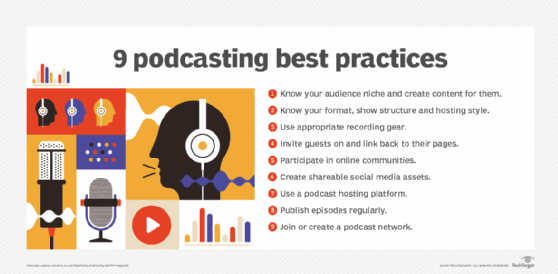
How to create a podcast
There are many ways to create a new podcast. The following podcasting equipment and components are needed to record an audio file:
- Podcast microphone. USB microphones are relatively cheap and easy to use to capture audio. The built-in microphone on a laptop or smartphone also works. A professional quality recording mic should be considered if a high audio quality podcast is the goal.
- Recording application. Many devices come with free audio recording applications, such as Apple's Voice Memos app, to record and save audio. Audacity is free audio recording software that works on desktop operating systems, like Microsoft Windows, Apple macOS and Linux. Recording applications may have editing software and enable exporting of audio files.
- Hosting site. Once recorded, a podcast can be distributed using a podcast distribution platform, such as Podbean, Podcast Websites or Spreaker.
Here are the nine steps to recording a podcast using a Windows computer and a USB microphone:
- Plug the microphone into the computer's USB port.
- Install the free Audacity program or another digital audio application. GarageBand is included with Apple iOS and macOS. Windows 10 comes with a pre-installed Voice Recorder app.
- Open the program, and set the audio input to recognize the audio from the microphone.
- Test the microphone to ensure the levels are appropriate and responding to audio in the room.
- Press the record button, and speak to start recording the intro.
- If necessary, edit the podcast afterward using the digital audio program's built-in tools or an application like Adobe Audition.
- Export the audio file using the digital audio program's export function.
- Upload the audio file to an audio sharing platform, such as SoundCloud. You can also use a podcast-specific platform, like Podbean or Spreaker. They help with hosting and podcast promotion.
- Share the link to the published podcast on social media and elsewhere to attract listeners.
Podcasters may follow a formal script or go more informal and just use show notes; it's entirely up to the podcaster. If podcasters wish to establish a loyal following, they must understand their target audience and demographic and have a clear purpose for creating the podcast.
What are the benefits of podcasting?
Podcasting has the following benefits:
- Easy to create. All it takes to make a podcast is a microphone, audio software, a computer and an internet connection. No additional knowledge or equipment is needed. One simple way to create a podcast is to speak into the voice notes app on a smartphone.
- Easy to distribute. Podcasts can be uploaded and made available to listeners using a free YouTube or SoundCloud account. Any service or device that can host an audio file can host a podcast.
- Regulation-free. There are no Federal Communications Commission or other government regulations for podcasts. This enables a level of free speech that may not be possible on more established platforms, like television and radio. However, podcasters are allowed to copyright their work.
- Long form. Podcasts can be any length. Some podcasts are over three hours long. That length is unusual for other forms of media, which lean toward snackable content. The long-form structure enables a more in-depth treatment of topics that is not as prevalent in other media.
- Informative. There are podcasts on every topic, including news, comedy, science and niche topics. For example, an entire podcast might focus on analyzing and reviewing a novel.
- On demand. Users can access and listen to a podcast at any time on their mobile devices. Podcasts are easy to listen to while doing other things, like working, driving, exercising and cleaning.
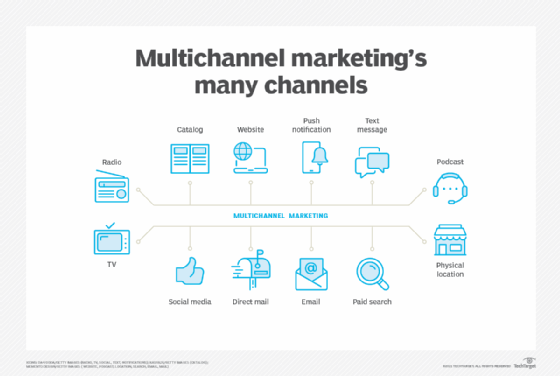
- Valuable marketing tool. The best podcasts help product marketers reach niche audiences. They are also a consistent touchpoint that followers can return to. They are an effective multichannel marketing tool because they provide helpful information without always trying to sell something. They also offer good backlinking opportunities, positively affecting a brand's search engine optimization. Podcasts often include guests, and podcasters can link to those guests' webpages in show notes. A startup tech company could use a podcast to educate listeners about the broader technology related to its product to showcase its expertise.
Podcast examples
According to Podcast Insights, there are a couple million podcasts on the internet today. Topics can range from broad subject areas, such as art, science, politics and comedy, to specific topics, like true crime.
Some popular podcasts are the following:
- And Introducing. A podcast about music, performers and bands.
- The Daily. News and analysis from The New York Times.
- The Joe Rogan Experience. A podcast that features long-form conversations with Joe Rogan, a mixed martial arts commentator and former TV host.
- Serial. A podcast that follows one in-depth news story over the course of an entire season.
- TED Talks Daily. Speakers expound on a broad range of topics from the popular Ted Talks series.
- This American Life. An NPR podcast that does theme feature stories.
The history of podcasting
Podcasting has existed since the 1980s. In its earliest form, it was called audio blogging. People would record their pieces and share the audio content over the internet, like auditory blog posts. In 2004, Ben Hammersly first used the term podcast to describe this content. The term was a combination of the words iPod and broadcast.
The growth of podcasts took off in the mid-2000s as broadband and internet use took hold. In 2004, former MTV video jockey Adam Curry and software developer Dave Winer wrote iPodder -- now called Juice -- an application that let users download internet radio station programs to their iPods.
Curry has been the host and co-host of several podcasts. He is referred to as the Podfather for his role in popularizing the medium. One of his first podcasts was Daily Source Code, intended for an audience interested in technology.
In 2019, Spotify acquired Gimlet Media and Anchor, two prominent podcast hosting platforms. That was the start of the streaming platform's interest in the format.
That same year, Edison Research issued the "Podcast Consumer Tracking Report," which stated that 90 million people in the U.S. had listened to podcasts in one month. The format has continued to grow in popularity in the corporate and consumer sectors.
Over the years, podcasting has become a valuable way to reach niche markets and gain a digital following. Learn four digital marketing best practices businesses should follow to incorporate new mediums, like podcasts.